Why Businesses Are Moving from Paper Receipts to Digital Receipts
Across the USA, UK, Canada, UAE, Europe, and Australia, businesses are slowly moving away from paper receipts.
Instead, they are adopting digital receipts for daily transactions, expense management, and record keeping.
This shift is not about trends — it is about efficiency, accuracy, and cost control.
In this article, we’ll explain:
- Why paper receipts are becoming a problem
- What digital receipts are
- Why businesses prefer digital over paper
- How digital receipts help with expenses and reimbursement
- When switching to digital receipts makes sense
The Problem with Paper Receipts
Paper receipts have been used for decades, but businesses face many issues with them today.
1. Easy to Lose or Damage
Paper receipts fade, tear, or get misplaced.
Employees often lose receipts before submitting expense claims.
2. Manual Record Keeping
Paper receipts require physical storage, sorting, and scanning — which takes time and space.
3. Reimbursement Delays
Unreadable or missing receipts often cause reimbursement requests to be rejected or delayed.
4. Ongoing Costs
Printers, paper rolls, ink, and maintenance increase long-term operational costs.
Because of these problems, paper receipts no longer fit modern business workflows.
What Are Digital Receipts?
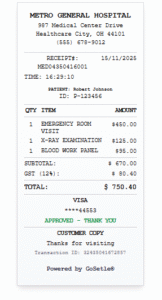
Digital receipts are electronic receipts generated online and stored digitally, usually as PDFs.
They can be:
- Downloaded instantly
- Printed when required
- Shared via email or messaging
- Uploaded to expense systems
Most businesses now create digital receipts using online receipt generators instead of handwritten or printed slips.
Why Businesses Prefer Digital Receipts
1. Faster and More Efficient
Digital receipts are generated in seconds.
No printing, no handwriting, no formatting issues.
2. Better Expense Management
Employees can submit clean digital receipts for:
- Travel expenses
- Meals
- Taxi and fuel
- Hotel stays
This reduces errors and speeds up reimbursement approvals.
3. Easier Accounting and Audits
Digital receipts:
- Are easy to store
- Can be searched by date or amount
- Are readable during audits
Accountants and finance teams strongly prefer digital records.
4. Lower Operational Costs
Businesses save money by reducing:
- Printer usage
- Paper waste
- Storage requirements
Over time, switching to digital receipts reduces recurring expenses.
5. Environment-Friendly
Many companies now follow paperless policies.
Digital receipts help reduce paper usage and support sustainability goals.
Digital Receipts for Reimbursement and Business Expenses
One of the biggest reasons businesses move to digital receipts is expense reimbursement.
Employees are often required to submit receipts for:
- Office travel
- Client meetings
- Meals
- Accommodation
- Fuel and parking
Digital receipts are:
- Clear and readable
- Easy to upload
- Accepted by HR and finance teams
This makes them ideal for reimbursement workflows.
Digital Receipts vs Paper Receipts (Quick Comparison)
| Digital Receipts | Paper Receipts |
|---|---|
| Instant creation | Time-consuming |
| Easy to store | Easy to lose |
| Accepted for reimbursement | Often rejected |
| Printable PDF | Fades over time |
| Eco-friendly | Paper waste |
Because of these advantages, digital receipts are becoming the global standard.
How Businesses Create Digital Receipts Today
Most businesses no longer use complicated software.
They use simple online tools available through the GoSetle Receipt Generator, where different receipt types can be created for:
- Sales
- Expenses
- Travel
- Food
- Rent
- Services
This approach works well for small businesses, freelancers, and growing companies.
When Should a Business Switch to Digital Receipts?
A business should consider digital receipts if:
- Employees submit expense claims
- Paper receipts are frequently lost
- Accounting work is becoming difficult
- Costs of printing are increasing
- Remote work or travel expenses are common
In most cases, switching improves efficiency almost immediately.
Conclusion
Paper receipts no longer meet the needs of modern businesses.
They slow down processes, increase costs, and cause reimbursement problems.
Digital receipts solve these issues by offering:
- Speed
- Accuracy
- Easy storage
- Better expense control
That’s why businesses worldwide are moving from paper receipts to digital receipts and using online receipt generators as part of their daily operations.
Create Free : GoSetle® Digital Receipts